Thanjavur
Chola capital · UNESCO temples · Bronze tradition · Tanjore painting
The Chola capital — where granite reached the sky
Thanjavur was the seat of the Chola empire at its greatest reach — the city from which Rajaraja Chola I and his son Rajendra Chola ruled an empire stretching from the Maldives to the Ganges, from the Malabar coast to the borders of Burma. What they built here was not just a temple. It was a statement in granite that has not been surpassed in a thousand years.
The Brihadeeswarar temple was completed in 1010 CE — a 66-metre vimana raised without mortar in a single reign. Beyond it, Thanjavur gave the world its bronze casting tradition, its Carnatic music lineage, its distinctive school of painting, and 50,000 manuscripts in the Saraswathi Mahal Library that remain irreplaceable records of a civilisation at its height.
This is not merely a heritage site. The traditions are alive. Bronze foundries in Swamimalai 38 kilometres away still cast Nataraja images by the same lost-wax Panchaloha process the Chola artisans invented. Tanjore painters work in studios steps from the Royal Palace. The Brihadeeswarar still receives daily worship after ten centuries.
The detail that changes how you see it
The Vimana and the Shadow
The Brihadeeswarar vimana is 66 metres tall — taller than any other temple structure of its era anywhere in the world. Rajaraja Chola had it positioned so precisely that the shadow of the tower does not fall on the ground at noon on the equinox. The capstone alone, placed at the summit, weighs 81 tonnes. How it was raised remains a subject of genuine architectural debate.
The 108 Poses and Bharatanatyam
Carved into the base of the vimana are 108 Bharatanatyam karanas — individual dance poses described in the Natya Shastra — the most complete sculptural record of the classical dance form in existence. These carvings were used by scholars to reconstruct lost performance traditions. To see them with a knowledgeable guide is to understand that the Brihadeeswarar is also a document.
The Nataraja — Born Here
The Chola bronze tradition produced the most significant sculptural objects in Indian art history. The Nataraja image — Shiva as Lord of Dance within a circle of fire — was conceived and first cast in the foundries of the Cauvery Delta during the 9th–12th centuries. The gesture language, the proportions, the iconographic details that have since been reproduced across the world all originated here. Working foundries in nearby Swamimalai continue the tradition.
Tanjore Painting — the Tradition
Tanjore painting developed under Maratha patronage in the 18th century — characterised by its use of gold leaf, semi-precious stones and glass inlay on a gesso surface. The subjects are almost always devotional: Krishna, Lakshmi, Saraswathi. Studios near the Royal Palace still work in this tradition and can be visited. We arrange a direct conversation with the artists rather than a guided sales experience.
Darasuram — the Temple Most Visitors Miss
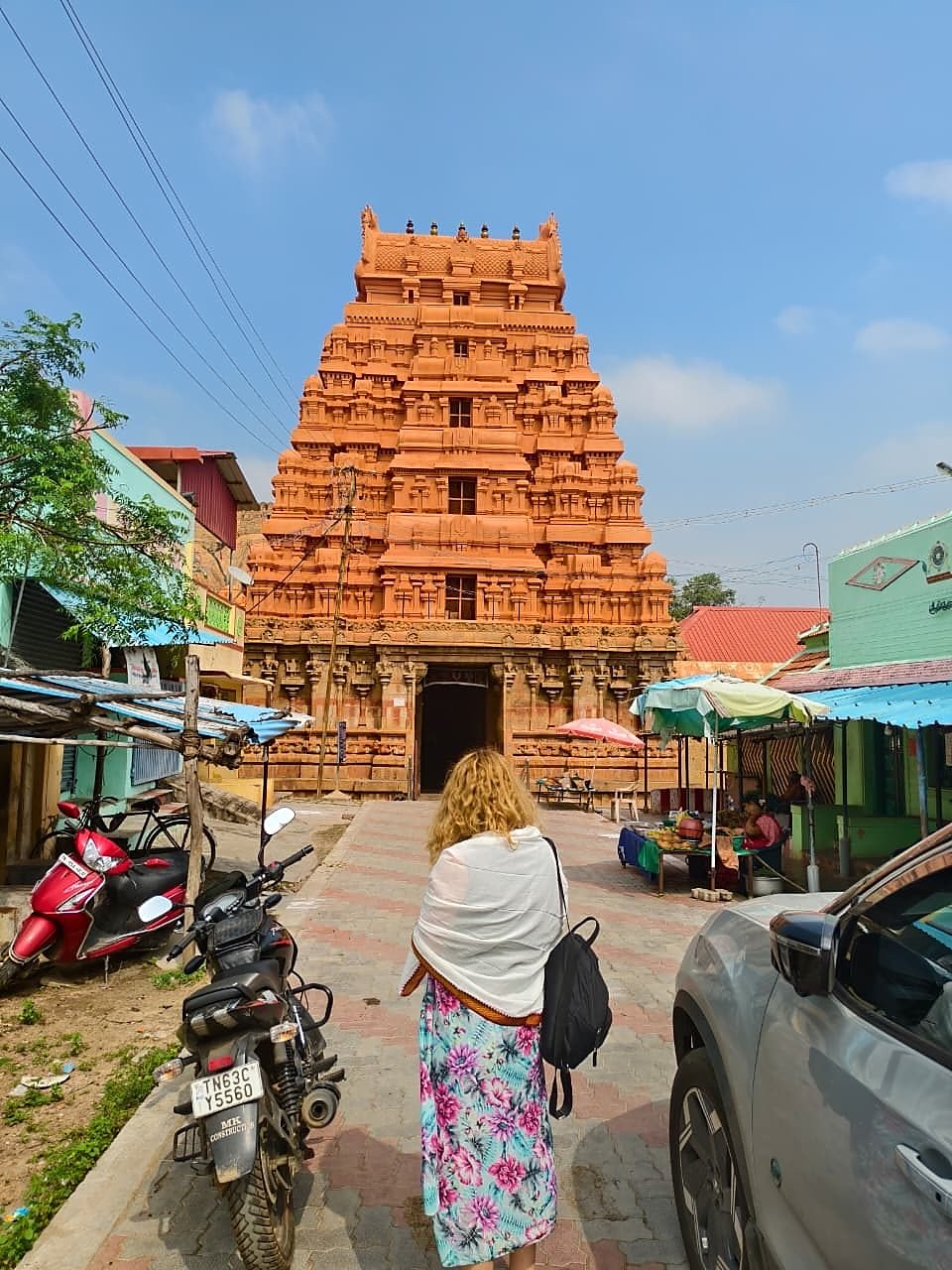
Twenty kilometres from Thanjavur is the Airavatesvara temple at Darasuram — another UNESCO World Heritage Chola monument, built a century after the Brihadeeswarar by Rajaraja Chola II. Smaller, more intimate, and almost always uncrowded. The chariot steps at the entrance are carved so precisely that they produced musical notes when struck. We always include Darasuram on Thanjavur itineraries.
When to Visit
October to February is the best season — cool enough to walk the temple precincts comfortably, and clear enough for photography. The Brihadeeswarar is most beautiful at dawn before crowds arrive; we arrange early access. The Thiagarajar Aradhana music festival at Thiruvarur (90 km) in January draws Carnatic musicians from across South India and can be incorporated into an extended Thanjavur itinerary.
Visit Thanjavur with Exotic Destination
Based in Madurai since 2013. Every journey to Thanjavur is personally designed — with proper time at the Brihadeeswarar, a foundry visit in Swamimalai, and a guide who can read the sculptures.